
Culturally responsive care
Care built around your family, not around us
Cultural responsiveness isn’t a training module we completed. It’s how we recruit, how we match nurses to families, how we write care plans, and how we measure whether we’ve done our job well.
The gap we were built to close
What happens when care doesn’t fit the family
Most agencies talk about clinical excellence. Fewer talk about what happens when a nurse walks into a home where the food, the language, the faith, or the way a family makes decisions doesn’t match the nurse’s own.
That gap is where families stop feeling seen. It’s where instructions get misunderstood, where parents stop asking questions, and where care quietly becomes something done to a family instead of with them.
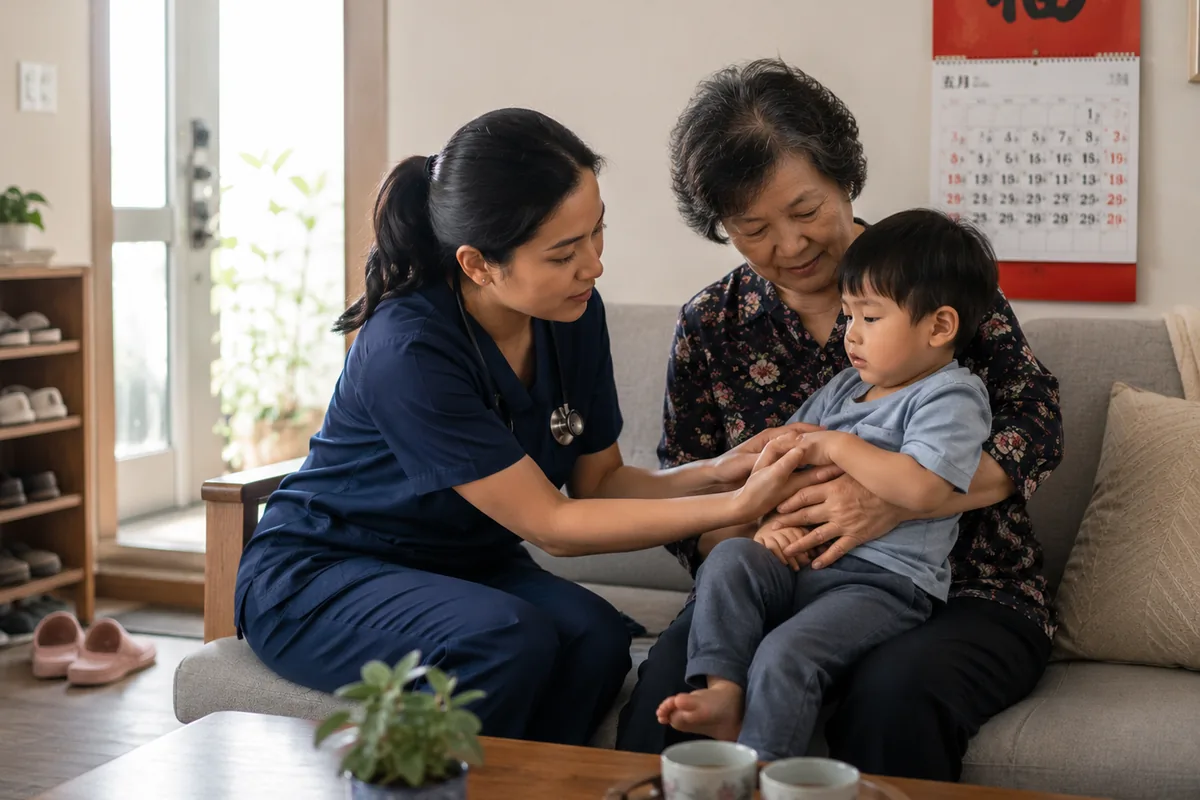
In practice
Three things this actually means
Language services
Interpreter services and care materials in multiple languages, so nothing important gets lost between family, nurse and physician.
Cultural understanding
We honour family traditions, values and preferences, and write them into the care plan rather than working around them.
Inclusive care
Welcoming and supporting all families and identities, without exception.
Matching
How we match a nurse to a family
Clinical fit is the floor, not the ceiling.
- The clinical skills your child’s care actually requires, verified before a nurse is assigned
- Language: spoken fluently enough for a hard conversation at 3am, not just a greeting
- Cultural familiarity, or the willingness and humility to learn your family’s way of doing things
- Practical fit: shift patterns, travel, and how a nurse works in a busy household
- Continuity: a small consistent team rather than whoever is free this week
Questions
Questions about how we match
Can we ask for a nurse who speaks our language?
Yes, and you should. Language is not a nicety in clinical care. It is how instructions get understood and how questions get asked. Tell us at the first conversation and we will tell you honestly what we can match.
What if our family does things differently?
Then that goes in the care plan. Food, prayer, who makes decisions, who is in the room, what happens at bedtime: none of it is a side note when a nurse is in your home for eight hours a day.
Do you work with interpreters?
Interpreter services and materials in multiple languages are part of how we work, so that nothing important is lost between the family, the nurse and the physician.
Tell us what matters in your home
The first conversation is where this starts. Nothing about your family is too small to mention.