
Pediatric ventilator care
Ventilator Care at home
Home ventilation is possible, and thousands of families do it. It works when someone skilled is watching the things that cannot be left to chance.
What this involves
Some children need a ventilator to breathe well: all the time, only at night, or only when they are unwell. Home ventilators are designed for exactly this, and children on them go to school, take holidays and grow up at home.
What makes that safe is vigilance. A ventilator alarm means something, every time. Circuits need changing, settings need checking against the prescription, batteries need charging, and someone needs to notice the slow change in a child’s breathing that comes before the fast one.
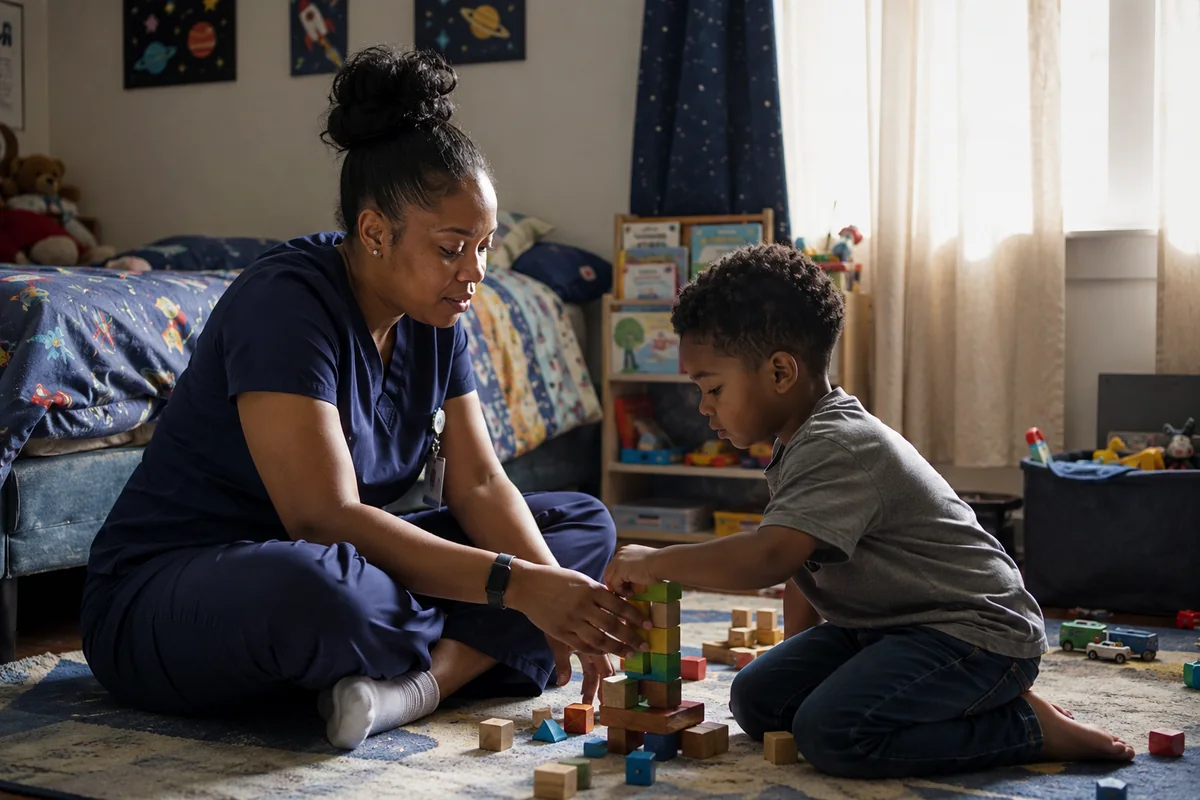
On every shift
What our nurses do
Written into the care plan, done the same way every shift, and documented.
- Ventilator checks against the prescribed settings at the start of every shift
- Circuit, filter and humidifier management, and equipment cleaning
- Alarm response: knowing which alarm means what, and acting in the right order
- Continuous monitoring of oxygen saturation, breathing effort and colour
- Coordination with your durable medical equipment supplier and respiratory therapist
- Backup readiness: manual resuscitation bag, charged batteries, and a written plan for power loss
Working with the rest of your child’s team
Home ventilation involves more people than most families expect: a pulmonologist, a respiratory therapist, an equipment supplier, sometimes a sleep clinic, and often the hospital team who discharged you.
We work to the plan those clinicians set, document what we see, and flag changes early, because the useful version of “we contacted the doctor” is the one that happens two days before an admission rather than two hours after.
Questions
Questions families ask about ventilator care
What happens if the power goes out?
Home ventilators have internal batteries, and most families also have an external battery. Your plan should name how long each lasts, who to call, and when to move to a manual resuscitation bag. Our nurses check battery charge each shift and practise the plan with you.
Does my child need a nurse awake all night?
That depends on your child’s needs and on what their physician and payer have authorized. Overnight nursing is common for ventilated children, and it is often what lets parents sleep well enough to work the next day.
Can a ventilated child leave the house?
Usually yes, with planning. Portable ventilators, charged batteries and a packed emergency kit make outings possible. Talk with your child’s clinical team about what is reasonable for your child.
Also available
Other services
Tracheostomy Care
Safe, expert trach management by nurses trained and competency-verified in pediatric airway care.
G-Tube & Enteral Feeding
Nutritional support and feeding tube care, built around your child’s schedule and your family’s routines.
Seizure Management
Monitoring, accurate medication administration, and calm, practised response when seizures happen.
Oxygen & Respiratory Support
Assessment and therapy to support breathing and oxygenation, day and night.
Medication Management
Timely, accurate administration and documentation of complex medication regimens.
Complex Nursing
Coordinated, whole-child care for children whose needs cross several conditions at once.
Content last reviewed . This page is general information, not medical advice — please talk to your child’s physician about their care.
Talk to a nurse, not a call centre
Tell us what your child needs and we will tell you honestly whether we can help.